HSSP Spring 2026
Course Catalog
Filter by Grade:
Filter by Class Length:
Filter by Difficulty:
Filter by Open/Closed Status:
| Jump to Categories | |
|---|---|
| Visual and Performing Arts | Computer Science |
| Engineering | Humanities |
| Mathematics | Science |
| Miscellaneous | |
Visual and Performing Arts
A16442: Introduction to Acting with Shakespeare
Difficulty: *
Teachers:
Iliana Flohr
All the world's a stage. . . . Dive into the world of Shakespeare in this 6-week acting course! We will engage with Shakespeare's work through an acting lens with fun activities, theatre games, group projects, and peer acting workshops. Students will explore Shakespeare's language: poetic style, iambic pentameter rhythm, literary devices, and more. They will learn how to analyze an advanced text through memorization and performance. Students will enjoy acting out characters, directing scenes, and crafting their own scripts. Each student will develop acting abilities and their own individual performance style. As students delve into acting, they will also learn skills in voice projection, self-expression, public speaking, and teamwork.
Class Style
Activity
Class Style
Activity
A16426: finding symmetry in letters: how to make your own ambigrams!
Difficulty: **
an ambigram is a visual design with a word or phrase written in such a way that you can read it from multiple perspectives. scroll through https://en.wikipedia.org/wiki/Ambigram for concrete examples—they're really cool!
this class will progressively introduce techniques for making ambigrams and guide you through making your own! we will mostly focus on rotational ambigrams, but we will also discuss and try other types of ambigrams. your ideas for words/phrases (e.g. your names!) that we should make ambigrams of are welcome! come dive into an art form that is a wonderful mix of lettering and puzzle-solving!
brush pens and chisel-tip markers will be provided, and calligraphy/typography basics will be covered (so no experience needed!). a tablet or phone that has a drawing app with a symmetry feature is nice to have, but optional.
Class Style
Activity
this class will progressively introduce techniques for making ambigrams and guide you through making your own! we will mostly focus on rotational ambigrams, but we will also discuss and try other types of ambigrams. your ideas for words/phrases (e.g. your names!) that we should make ambigrams of are welcome! come dive into an art form that is a wonderful mix of lettering and puzzle-solving!
brush pens and chisel-tip markers will be provided, and calligraphy/typography basics will be covered (so no experience needed!). a tablet or phone that has a drawing app with a symmetry feature is nice to have, but optional.
Class Style
Activity
Computer Science
C16443: Fundamentals of Programming
Difficulty: **
Teachers:
Violet Cato,
Trinity Dysis
Greetings!
This is a class for anyone from a total beginner to someone with a little bit of programming experience to learn good fundamentals and get a strong intro to programming.
We'll talk through all the core concepts you need to know, and do lots of practice problems both individually and as a class to get firsthand experience applying them.
We'll be looking at both procedural programming (via Python) and object-oriented programming (via Java).
Is it important that you bring a device that is internet capable if at all possible (there will be some laptops as well), as we'll accessing our practice problems via browser.
Looking forward to seeing you in class!
Violet Z. Cato
(:
Class Style
Activity
Prerequisites
Please bring an internet capable device (laptop/chromebook preferable, but anything works) if at all possible. It is also planned to have laptops if this is not possible -- don't let this keep you from enrolling!
This is a class for anyone from a total beginner to someone with a little bit of programming experience to learn good fundamentals and get a strong intro to programming.
We'll talk through all the core concepts you need to know, and do lots of practice problems both individually and as a class to get firsthand experience applying them.
We'll be looking at both procedural programming (via Python) and object-oriented programming (via Java).
Is it important that you bring a device that is internet capable if at all possible (there will be some laptops as well), as we'll accessing our practice problems via browser.
Looking forward to seeing you in class!
Violet Z. Cato
(:
Class Style
Activity
Prerequisites
Please bring an internet capable device (laptop/chromebook preferable, but anything works) if at all possible. It is also planned to have laptops if this is not possible -- don't let this keep you from enrolling!
C16456: CoCo: Build Multiplayer Scratch Games, Collaborative Stories, Animations + Learn about AI with hands-on projects
Difficulty: *
Teachers:
Manuj Dhariwal,
Shruti Dhariwal
In these hands-on sessions, you will get to explore CoCo (coco.build), a new platform developed by a team of PhD researchers from MIT Media Lab.
On CoCo, you can co-create, code, and collaborate with peers in real-time across a variety of languages (such as Scratch, Javascript, and others). Link to a short video of the platform in action: https://bit.ly/mit-coco-video
We’ll explore how you can use CoCo to build multiplayer games, collaborative art, stories, animations, music, and also physical computing projects with hardware devices such as Micro:bit and Makey Makey. We’ll also explore Litte Language Models, a new AI education microworld within CoCo to learn powerful ideas underlying AI.
Class Style
Activity
Prerequisites
1) Please bring your own devices (laptops preferred, but tablets can work too). You’ll be building projects on an online platform during the session. 2) Some experience with Scratch is preferred, but not required.
On CoCo, you can co-create, code, and collaborate with peers in real-time across a variety of languages (such as Scratch, Javascript, and others). Link to a short video of the platform in action: https://bit.ly/mit-coco-video
We’ll explore how you can use CoCo to build multiplayer games, collaborative art, stories, animations, music, and also physical computing projects with hardware devices such as Micro:bit and Makey Makey. We’ll also explore Litte Language Models, a new AI education microworld within CoCo to learn powerful ideas underlying AI.
Class Style
Activity
Prerequisites
1) Please bring your own devices (laptops preferred, but tablets can work too). You’ll be building projects on an online platform during the session. 2) Some experience with Scratch is preferred, but not required.
C16448: From Philosophy to Computation: How does a computer add two numbers? Full!
Difficulty: **
Teachers:
Nohman Akhtari,
Simon Henniger
What do philosophy, mathematics, and electronics have in common? In this course, you’ll find out by building a working machine on a breadboard that can add two numbers.
We begin with a classic problem: how can reasoning be made precise enough to be mechanical? Attempts to answer this question within philosophy gave rise to propositional logic, which was later picked up by mathematicians and then became a foundation of computer science.
This course covers the theory behind logic and binary numbers. But we don't stop there: we will be designing and assembling a simple adding machine using electronic components. Along the way, you’ll gain practical experience with breadboards, basic prototyping techniques, and digital circuits, turning abstract logical rules into physical behavior you can see and test. By the end, you will have built a small piece of that logic yourself.
Material will be provided, and you will get to take your "computer"
home at the end of this class.
Class Style
Seminar
Prerequisites
None at all. It helps if you have played with a breadboard before, but that is not required.
We begin with a classic problem: how can reasoning be made precise enough to be mechanical? Attempts to answer this question within philosophy gave rise to propositional logic, which was later picked up by mathematicians and then became a foundation of computer science.
This course covers the theory behind logic and binary numbers. But we don't stop there: we will be designing and assembling a simple adding machine using electronic components. Along the way, you’ll gain practical experience with breadboards, basic prototyping techniques, and digital circuits, turning abstract logical rules into physical behavior you can see and test. By the end, you will have built a small piece of that logic yourself.
Material will be provided, and you will get to take your "computer"
home at the end of this class.
Class Style
Seminar
Prerequisites
None at all. It helps if you have played with a breadboard before, but that is not required.
Engineering
E16433: How to Solve Climate Change with Thermal Energy Networks
Difficulty: ***
Teachers:
Jason Chen,
Megan Lim
Did you know that globally, almost a third of greenhouse gas emissions come from the buildings we live and work in every day? It takes an incredible amount of energy to heat your home during winter or to keep a grocery store cool during summer.
Building decarbonization is a critical part of any strategy to eliminate greenhouse gas emissions. The transition to renewable energy sources, like thermal energy networks, is essential for reducing emissions and mitigating climate change. These transitions, however, are not just technological but also have significant social, political, and environmental dimensions.
In this class, you will learn about thermal energy networks and how they are one of the most efficient, cost-effective systems available to deliver climate-friendly heating and cooling equitably to entire neighborhoods and school campuses. Through lectures, hands-on activities, and discussions, you'll get valuable insights into the current decarbonization scene. Throughout the 6 weeks, we will work through some hypothetical scenarios where you’ll see what factors affect whether a thermal energy system is feasible and how to implement it.
We will also discuss what roles youth can play in decarbonizing our communities now, and how that might translate to careers in the future. Let’s accelerate decarbonization together!
Class Style
Activity
Building decarbonization is a critical part of any strategy to eliminate greenhouse gas emissions. The transition to renewable energy sources, like thermal energy networks, is essential for reducing emissions and mitigating climate change. These transitions, however, are not just technological but also have significant social, political, and environmental dimensions.
In this class, you will learn about thermal energy networks and how they are one of the most efficient, cost-effective systems available to deliver climate-friendly heating and cooling equitably to entire neighborhoods and school campuses. Through lectures, hands-on activities, and discussions, you'll get valuable insights into the current decarbonization scene. Throughout the 6 weeks, we will work through some hypothetical scenarios where you’ll see what factors affect whether a thermal energy system is feasible and how to implement it.
We will also discuss what roles youth can play in decarbonizing our communities now, and how that might translate to careers in the future. Let’s accelerate decarbonization together!
Class Style
Activity
E16439: Audio Electronics: From Circuits to Sick Beats
Difficulty: **
Teachers:
Matthew Taylor,
Franklin Wei
Have you ever wanted to make electronic music? Or make machines that make electronic music? Then this class is for you! We’ll start with an overview of electronic music synthesis and introduce some key building blocks that make up a synthesizer: oscillators, envelope generators, amplifiers, and filters. Then, we’ll work our way down to the raw analog circuits which implement these building blocks. At the end of the course, we’ll discuss digital audio processing and how it differs from analog synthesis. Throughout the course, we’ll provide live demos using an analog modular synthesizer, interactive circuit simulations, and music production software. No experience with circuit design or music theory is required.
Class Style
Lecture
Prerequisites
Basic trigonometry (sin, cos)
Class Style
Lecture
Prerequisites
Basic trigonometry (sin, cos)
Humanities
H16449: Intro to Epistemology: What can I know?
Difficulty: **
Teachers:
Nohman Akhtari,
Simon Henniger
How do you know you are not now dreaming? In his famous Meditations, René Descartes uses this idea to argue that he cannot know any belief based on his experience. From this, Descartes establishes his famous conclusion: the only thing he can know for certain is that he exists ($$\textit{cogito, ergo sum}$$). This insight laid the foundation for modern external world skepticism. Ever since, philosophers have expended great effort trying to defeat, argue against, or undermine this skepticism.
This course is an introduction to Theory of Knowledge. We will first show how difficult — perhaps even impossible? — it is to formulate a logically sound refutation of Descartes’ Dreaming Argument. We will then examine different theories on what it means for a person $$S$$ to know a proposition $$P$$. Specifically, we will cover:
- The Justified-True-Belief of Knowledge
- Alvin Goldman's Process Reliabilism
- Robert Nozick's Tracking Theory of Knowledge
For each of these theories, we will look at the strengths and weaknesses, and finally, see how they respond to Descartes' challenge. Can any of these theories resolve the Dreaming Argument nearly 400 years later? Come to class if you want to find out.
Class Style
Discussion
Prerequisites
No prerequisites.
This course is an introduction to Theory of Knowledge. We will first show how difficult — perhaps even impossible? — it is to formulate a logically sound refutation of Descartes’ Dreaming Argument. We will then examine different theories on what it means for a person $$S$$ to know a proposition $$P$$. Specifically, we will cover:
- The Justified-True-Belief of Knowledge
- Alvin Goldman's Process Reliabilism
- Robert Nozick's Tracking Theory of Knowledge
For each of these theories, we will look at the strengths and weaknesses, and finally, see how they respond to Descartes' challenge. Can any of these theories resolve the Dreaming Argument nearly 400 years later? Come to class if you want to find out.
Class Style
Discussion
Prerequisites
No prerequisites.
H16470: Humanities, Arts, and Social Sciences (HASS) Lecture Series
Difficulty: **
Teachers:
Various Teachers
Explore a new HASS topic every week with lectures given by various teachers!
Class Style
Lecture
Class Style
Lecture
Mathematics
M16458: Surface Level Intro to Surfaces
Difficulty: **
Teachers:
Cindy Zhang
Learn about surfaces! This is a geometry class unlike what you learn in high school. Exposure to matrices or groups is helpful but not at all required. Words that don't describe this class: flat, chaotic. Think outside the plane flexibly and maybe a little squishily.
Class Style
Seminar
Class Style
Seminar
M16438: Beautiful Ideas in Theoretical Computer Science
Difficulty: ****
Teachers:
Adelmo Morrison Orozco
Have you ever wondered what makes computation so powerful? What are the limits to the problems computers can solve, even in theory? What's the computational power of 'proofs with small allowed error'? How do you show exactly how hard a function is to compute with circuits?
If so, this course is for you! We'll explore many beautiful -- some (Steven Rudich) might even call them Great -- ideas in theoretical computer science. If you enjoy thinking about computation and love math sign up!
Class Style
Lecture
Prerequisites
Basic understanding of proofs (e.g. contradiction, implication, simple logic). Just enough to follow along! Elementary probability knowledge (e.g. expectations, being able to follow simple probability manipulations). Familiarity with algorithms and simple pseudocode is essential. Especially asymptotic notation -- this will be used heavily. Some familiarity with discrete mathematics generally is also useful but not strictly necessary. NOTE: If you enjoy thinking abstractly about math and neat ideas, don't let one of these requirements stop you! I'll try to make the course as self-contained as possible. However, I will cover many advanced topics relatively fast so brace yourselves!
If so, this course is for you! We'll explore many beautiful -- some (Steven Rudich) might even call them Great -- ideas in theoretical computer science. If you enjoy thinking about computation and love math sign up!
Class Style
Lecture
Prerequisites
Basic understanding of proofs (e.g. contradiction, implication, simple logic). Just enough to follow along! Elementary probability knowledge (e.g. expectations, being able to follow simple probability manipulations). Familiarity with algorithms and simple pseudocode is essential. Especially asymptotic notation -- this will be used heavily. Some familiarity with discrete mathematics generally is also useful but not strictly necessary. NOTE: If you enjoy thinking abstractly about math and neat ideas, don't let one of these requirements stop you! I'll try to make the course as self-contained as possible. However, I will cover many advanced topics relatively fast so brace yourselves!
M16444: Bridge Crossing 101: An Intro to Graph Theory Full!
Difficulty: ***
Teachers:
Cyrus Rule,
Sophia Smith
Have you ever wondered whether it’s possible to cross every bridge in a city exactly once? Or how many colors you really need to color a map?
In this class, we’ll explore graph theory, the mathematics of connections. Starting from simple drawings of dots and lines, we’ll build up to powerful ideas like Eulerian circuits, planar graphs, and graph coloring. Along the way, you’ll discover some surprising results: why there are only five Platonic solids, how to tell when you can connect points without crossing lines, and what it means for a graph to live on a donut.
The class will be hands on and very visual, with plenty of puzzles, experiments, and examples you can play with. By the end, you’ll be able to model real-world situations using graphs, reason carefully about structure, and see everyday problems in a completely new way.
No advanced math background required! Just curiosity and a willingness to think creatively.
Class Style
Activity
Prerequisites
Comfortable with arithmetic and can do small proofs / use logic (it might be nice to have taken Geometry because of this but its not necessary)
In this class, we’ll explore graph theory, the mathematics of connections. Starting from simple drawings of dots and lines, we’ll build up to powerful ideas like Eulerian circuits, planar graphs, and graph coloring. Along the way, you’ll discover some surprising results: why there are only five Platonic solids, how to tell when you can connect points without crossing lines, and what it means for a graph to live on a donut.
The class will be hands on and very visual, with plenty of puzzles, experiments, and examples you can play with. By the end, you’ll be able to model real-world situations using graphs, reason carefully about structure, and see everyday problems in a completely new way.
No advanced math background required! Just curiosity and a willingness to think creatively.
Class Style
Activity
Prerequisites
Comfortable with arithmetic and can do small proofs / use logic (it might be nice to have taken Geometry because of this but its not necessary)
Science
S16422: This is Beowulf... SOS...
Difficulty: *
Teachers:
Stirling Newberry
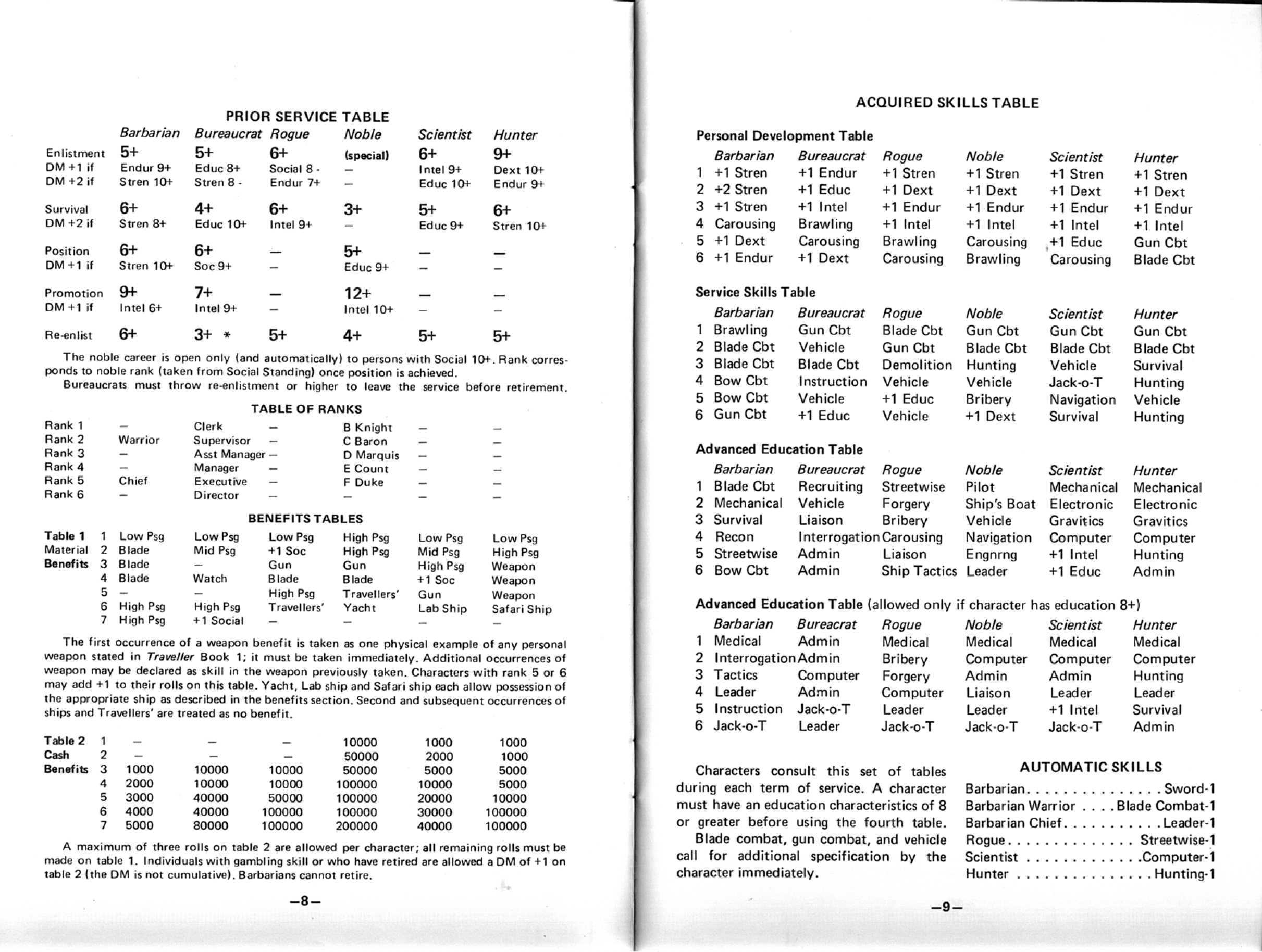
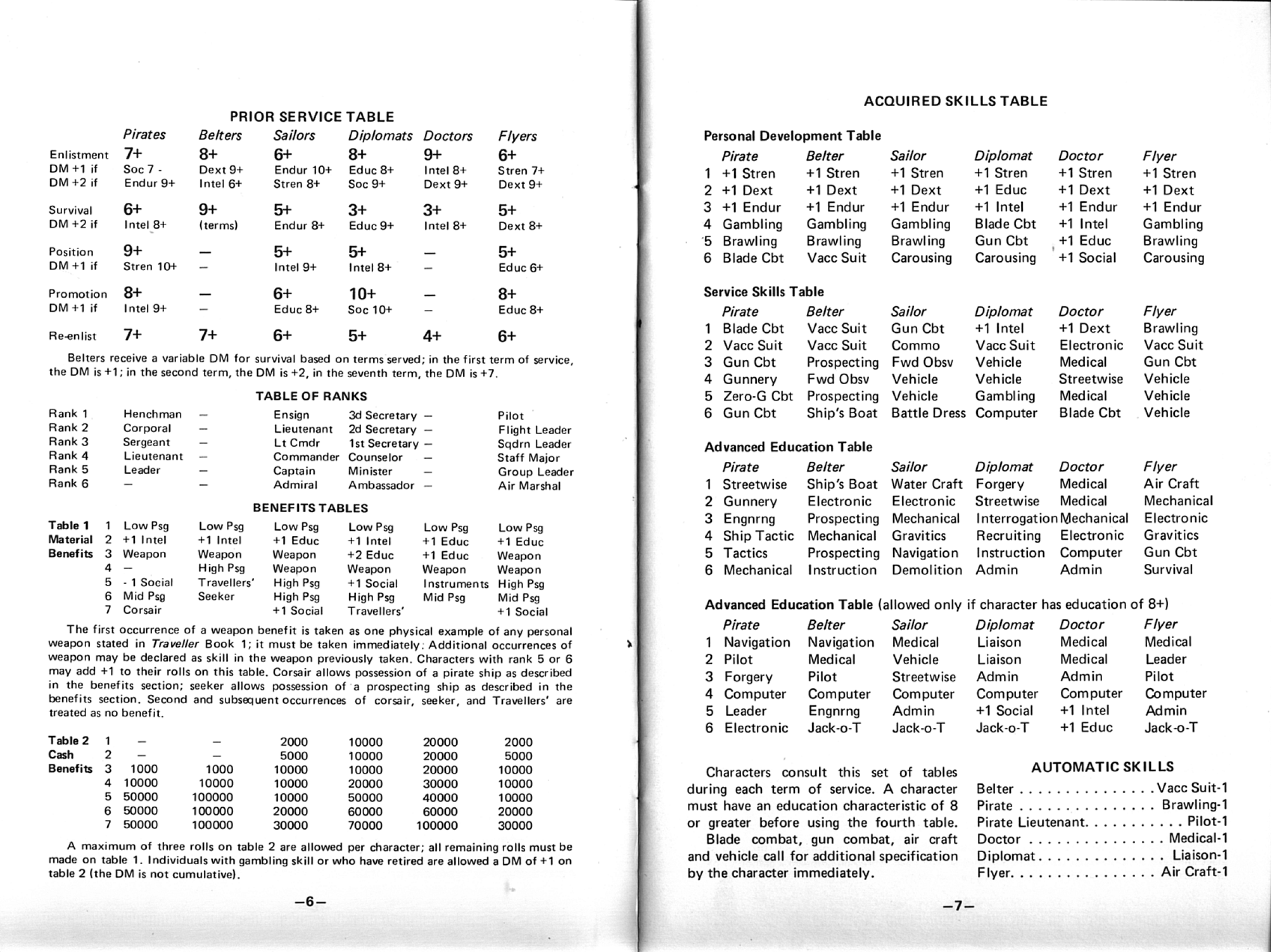
This will be role-playing, particularly in what is called the "Old School Renaissance" with Classic Traveller as it subsystem - being the oldest TTRPG started in 1977. We are teaching classical game theory, which will tell people what the best option available is, including the Nash equilibrium.
We also may kill some stuff.
Class Style
Activity
Prerequisites
None
We also may kill some stuff.
Class Style
Activity
Prerequisites
None
S16436: An Introduction to Linguistics: The Science of Language
Difficulty: **
Have you ever thought about how amazing language is? It's something we all use effortlessly every day, yet it's one of the most complex human abilities. Just like other natural phenomena, language can be observed and investigated in a scientific way. But the unique thing about language is that everyone has their own personal and infinite data set living inside their brain, their own private laboratory for testing all sorts of hypotheses about how language works.
Spoken languages are made up of complex sequences of carefully produced sounds and an exploration of these sounds will be our first task. We will go from phonetics, the way sounds are produced to phonology, the way these sounds are put together to form words. We will also examine the formational components of sign languages. Next, we will examine morphology and syntax, or how we build complex words and put words together to form sentences. Finally, we will turn to meaning, examining semantics or the study of how we interpret the meaning of sentences.
Every aspect of the way you use language provides potential insight into how language works. Together, we will puzzle over different aspects of language, uncovering things that you didn’t know you knew about the language(s) you use every day, as well as discovering things about a variety of other languages. So come learn how Linguistics, the science of language, relates to you.
Class Style
Seminar
Prerequisites
Curiosity about language.
Spoken languages are made up of complex sequences of carefully produced sounds and an exploration of these sounds will be our first task. We will go from phonetics, the way sounds are produced to phonology, the way these sounds are put together to form words. We will also examine the formational components of sign languages. Next, we will examine morphology and syntax, or how we build complex words and put words together to form sentences. Finally, we will turn to meaning, examining semantics or the study of how we interpret the meaning of sentences.
Every aspect of the way you use language provides potential insight into how language works. Together, we will puzzle over different aspects of language, uncovering things that you didn’t know you knew about the language(s) you use every day, as well as discovering things about a variety of other languages. So come learn how Linguistics, the science of language, relates to you.
Class Style
Seminar
Prerequisites
Curiosity about language.
S16445: Breaking the Universe: A Guide to Bad Ideas and Unhinged Physics Full!
Difficulty: **
Have you ever stayed up at 3 AM wondering if you could actually cook a chicken just by slapping it really, really hard? Or how long you’d survive if the Sun just... deleted itself? Or how many hamsters it would actually take to power a Tesla?
The internet is full of wild theories, but in this class, we’re going to find the real answers. We are taking the most chaotic, absurd, and 'strictly theoretical' questions we can find and breaking them down to see what would really happen.
We’ll explore doomsday scenarios, the limits of human survival, and all of your darkest intrusive thoughts. We’ll figure out if you can scream loud enough to boil water, if you can jump out of a falling elevator to save your life, and exactly how fast you have to drive to make a red light look green. Stop guessing and come find out exactly how the universe breaks when you push it too far.
Class Style
Lecture
The internet is full of wild theories, but in this class, we’re going to find the real answers. We are taking the most chaotic, absurd, and 'strictly theoretical' questions we can find and breaking them down to see what would really happen.
We’ll explore doomsday scenarios, the limits of human survival, and all of your darkest intrusive thoughts. We’ll figure out if you can scream loud enough to boil water, if you can jump out of a falling elevator to save your life, and exactly how fast you have to drive to make a red light look green. Stop guessing and come find out exactly how the universe breaks when you push it too far.
Class Style
Lecture
S16453: World of Parasites
Difficulty: *
Teachers:
Renuka Late
Ever wonder how the tiniest creatures are able to hijack bodies 10000x their size? Join this class where we will talk about different parasites, how they are able to competitively survive, and much much more! We will also discuss how drugs / treatments are used and developed to combat these creatures :)
Class Style
Lecture
Prerequisites
Basic Biology might help!
Class Style
Lecture
Prerequisites
Basic Biology might help!
S16440: Pathology Naturewalk
Difficulty: **
Teachers:
Andrew Thompson
A crash course in the study of disease. Each class will begin with introducing the pathophysiology of select disease processes and using this to showcase the interactions of the various organ systems. Each class will end with a show-and-tell of sorts connecting the discussed disease with phenomena of the everyday and nature. The overall theme of the course will revolve around the examining of boundaries, in the body and in nature. The place where one thing meets another is where all the interesting stuff happens.
Class Style
Lecture
Prerequisites
basic understanding of biology and chemistry
Class Style
Lecture
Prerequisites
basic understanding of biology and chemistry
S16427: food (bio)chemistry!
Difficulty: ***
Teachers:
Boheng Cao,
sovannjet lim
can you draw the chemical structure for the flavor of french fries? yogurt? caramel? why are so many savory things brown, like soy sauce or steak or roasted nuts? are artificial sweeteners really that bad for you? why do you need antioxidants—what even are they, and what do they do in the body?
in this class, we will connect the various food groups to different types of biological macromolecules and discuss the chemical structure of these molecules, their reactivity in the kitchen, their function and metabolism in the body, and what this all means for your everyday interactions with food. along the way, we’ll touch on many terms commonly found on nutrition labels.
organic chemistry background will be provided. we may also ask for your suggestions on what to cover, in case there's some food or food fact you're itching to know the (bio)chemical details of!
Class Style
Lecture
Prerequisites
ideally a high school chemistry class, but at minimum, understand: (1) periodic table trends (e.g. electronegativity, atomic radius), (2) covalent vs. ionic bonds, and (3) Lewis structures (i.e. know that a line represents two shared electrons (a covalent bond)).
in this class, we will connect the various food groups to different types of biological macromolecules and discuss the chemical structure of these molecules, their reactivity in the kitchen, their function and metabolism in the body, and what this all means for your everyday interactions with food. along the way, we’ll touch on many terms commonly found on nutrition labels.
organic chemistry background will be provided. we may also ask for your suggestions on what to cover, in case there's some food or food fact you're itching to know the (bio)chemical details of!
Class Style
Lecture
Prerequisites
ideally a high school chemistry class, but at minimum, understand: (1) periodic table trends (e.g. electronegativity, atomic radius), (2) covalent vs. ionic bonds, and (3) Lewis structures (i.e. know that a line represents two shared electrons (a covalent bond)).
Miscellaneous
X16469: STEM Lecture Series
Difficulty: **
Teachers:
Various Teachers
Explore a new STEM topic every week with lectures given by various teachers
Class Style
Lecture
Class Style
Lecture
X16441: Conlang-ing: Invent your own language!
Difficulty: **
Teachers:
Violet Cato,
Trinity Dysis
Greetings!
Conlang-ing is the art of creating languages by hand.
"Conlang" is a compound noun, short for "Constructed language".
Some you might recognize are Esperanto, Lojban, Loglan, Klingon, Vulcan, Dothraki, and a myriad of J.R.R. Tolkien's works.
This class is for those who a desire to learn more about linguistics (the study of languages) and create their own languages.
This has been run before as a quick crash-course in previous ESP Splash! events, but this will be a more thorough course that will take the time to go step by step through language creation.
Over the 6 weeks of the course, we'll learn and practice the four major components of conlang-ing...
- Phonetics (sounds)
- Graphics (visuals, writing systems)
- Semantics (word structure and functionality)
- Syntactics (grammar and cohesive meaning)
...and put them into practice in two ways:
- as a class (contributing to an ESP conlang collaboratively)
- in groups/individually (on whatever your heart desires personally)
We'll take a look at famous and impactful conlangs, learn to understand the IPA (International Phonetic Alphabet), and make a lot of weird sounds as we struggle to pronounce unusual consonants :P
Looking forward to seeing you in class!
Violet Z. Cato
(:
Class Style
Activity
Conlang-ing is the art of creating languages by hand.
"Conlang" is a compound noun, short for "Constructed language".
Some you might recognize are Esperanto, Lojban, Loglan, Klingon, Vulcan, Dothraki, and a myriad of J.R.R. Tolkien's works.
This class is for those who a desire to learn more about linguistics (the study of languages) and create their own languages.
This has been run before as a quick crash-course in previous ESP Splash! events, but this will be a more thorough course that will take the time to go step by step through language creation.
Over the 6 weeks of the course, we'll learn and practice the four major components of conlang-ing...
- Phonetics (sounds)
- Graphics (visuals, writing systems)
- Semantics (word structure and functionality)
- Syntactics (grammar and cohesive meaning)
...and put them into practice in two ways:
- as a class (contributing to an ESP conlang collaboratively)
- in groups/individually (on whatever your heart desires personally)
We'll take a look at famous and impactful conlangs, learn to understand the IPA (International Phonetic Alphabet), and make a lot of weird sounds as we struggle to pronounce unusual consonants :P
Looking forward to seeing you in class!
Violet Z. Cato
(:
Class Style
Activity
X16457: Puzzles!
Difficulty: **
Teachers:
Rebecca Chang,
Annie Guo,
Marvin Mao,
Atul Shatavart Nadig,
Alex Stoneman,
Elizabeth Zhang
Do you enjoy escape rooms or jigsaws? What about crosswords or logic puzzles? Come learn about more puzzlehunts and experience all different types of puzzles! Beyond just these everyday types, puzzles can be about almost anything, like pop culture, math, memes, or any interest imaginable—there’s something for everyone. In this class, we'll talk about the basics, work on some familiar and new puzzle types, and enjoy the “aha!” moments.
Class Style
Lecture
Class Style
Lecture
X16471: Miscellaneous Lecture Series
Difficulty: **
Teachers:
Various Teachers
Explore a new Miscellaneous topic every week with lectures given by various teachers!
Class Style
Lecture
Class Style
Lecture